When a person meets a robot for the first time, what are they trying to understand?
JESSIE: It depends on the context, but the first question that comes to my mind is: “Why is it here? What is it here for?” Sometimes its role is obvious. Sometimes it isn’t.
DIMITRI: And then: how do I interact with it? Is there a button? Can I shake its hand or talk to it? Does it speak English? French? Does it need a trigger word? Being able to read its intentions and tasks matters just as much.
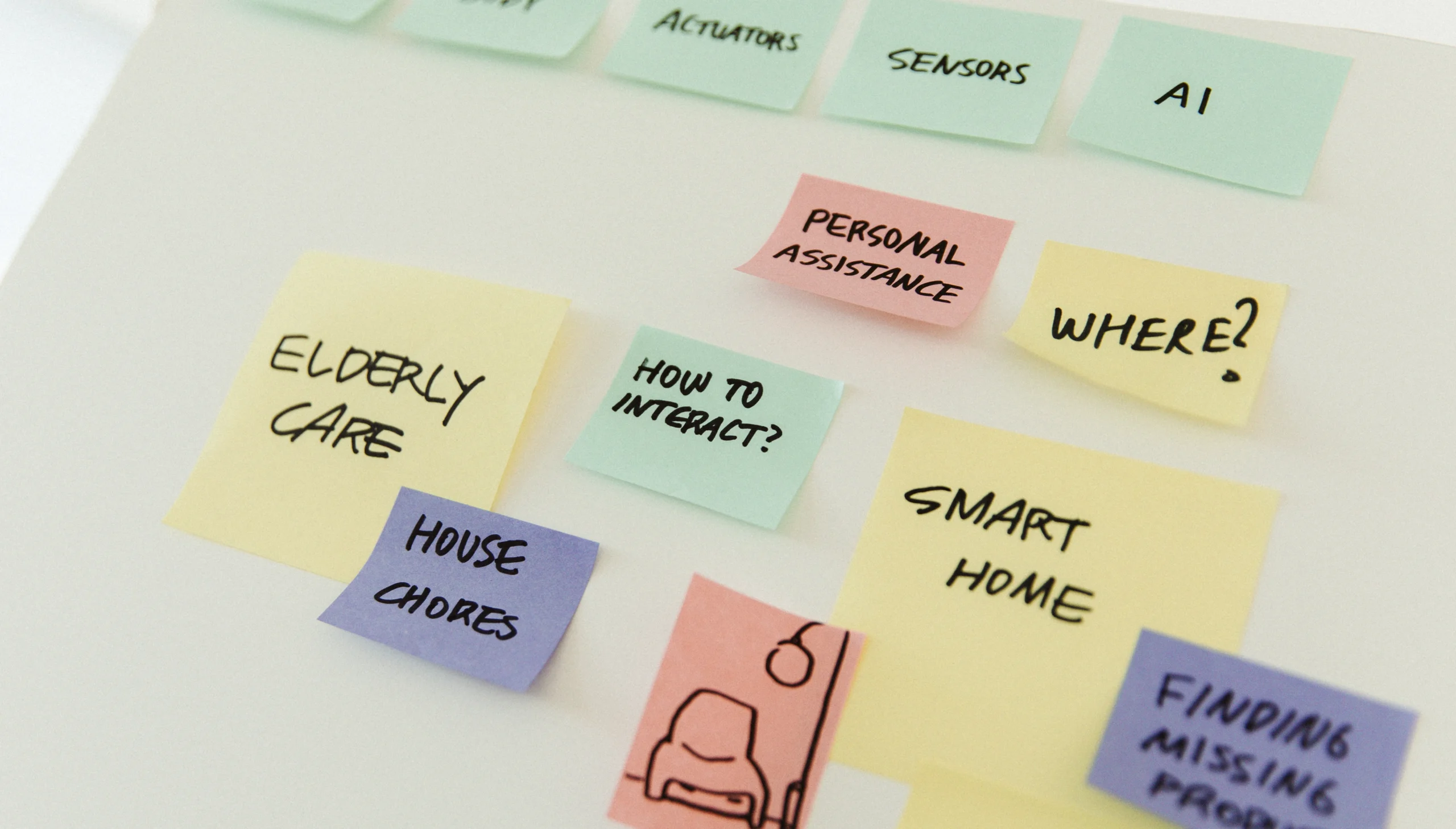
Our robotics team brainstormed where robots might be accepted in a European market.
Why does that first moment matter so much for acceptance?
JESSIE: It’s actually similar to humans: there’s no second chance to make a first impression. That’s especially true for a high-tech product like a robot, where people naturally have high expectations. Even a small mistake can have a strong impact.
VIKTORIA: I’d actually say it matters even more for robots, because there’s no social grace period. With a new colleague, you extend the benefit of the doubt. With a machine, one bad interaction can confirm a bias: “See, it doesn’t work.” If I’m more afraid than curious because I can’t predict its next move, the robot has already lost its benefit for me.
We’re using the word “legibility” a lot. What does legibility mean in robotics?
DIMITRI: A legible robot should present its intentions through its form alone. Its task and purpose should be clear even before we think about asking it.
VIKTORIA: Exactly. Within seconds, I should know what this robot is here for, what I can expect from it, and even how I can choose not to interact with it.
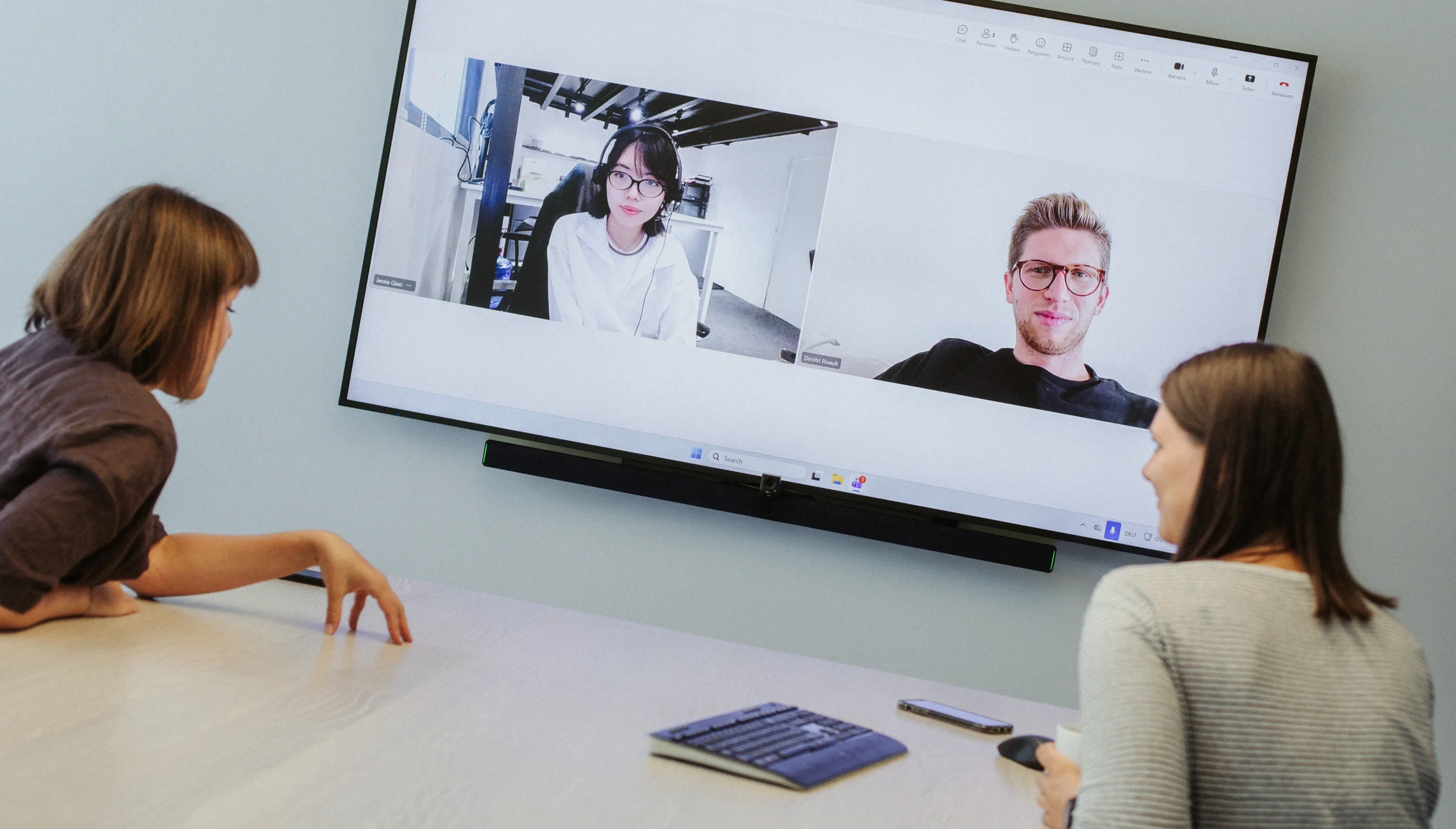
Left to right: Lisa Dachs (Brand Strategy & Research Lead), Jessie Qiao (Strategy & Research Consultant), Dimitri Rivault (Interaction Design Lead), Viktoria Reidl (Strategy Consultant).
Is legibility mostly about the interface, or is the whole robot part of the interface?
DIMITRI: The whole robot is the interface. Stance, motion, sound, light, proportion — every one carries a signal. A screen bolted on can’t rescue body language that says the wrong thing.
VIKTORIA: Because, just like with humans, we read intention through body language. A robot has body language too: how it slows before turning, how it orients towards you. So, legibility isn’t decoration added at the end. It emerges from decisions about form, motion, and detail throughout the design.
Why should brands consider humans before designing their robots?
LISA: Because the robot only succeeds if people accept it, and acceptance is decided by the human, not the machine. If you design from the technology outward, you optimise for what the robot can do. If you design from the human inward, you optimise for what the person needs to understand and trust. Technical capability matters little if people hesitate, misread the robot’s intent, or avoid it.
Does a human-first robot need to look like a human?
DIMITRI: Absolutely not. Human-readable does not mean human-shaped. It needs to be transparent in the way it acts and able to take cues from humans – gaze, pace, hesitation…
VIKTORIA: In fact, a human-like form can raise expectations the robot can’t meet, which hurts legibility. The challenge is to cleverly pick the similarities where they’re useful, then move away from the human form (or improve on it) where function and context demand something else.
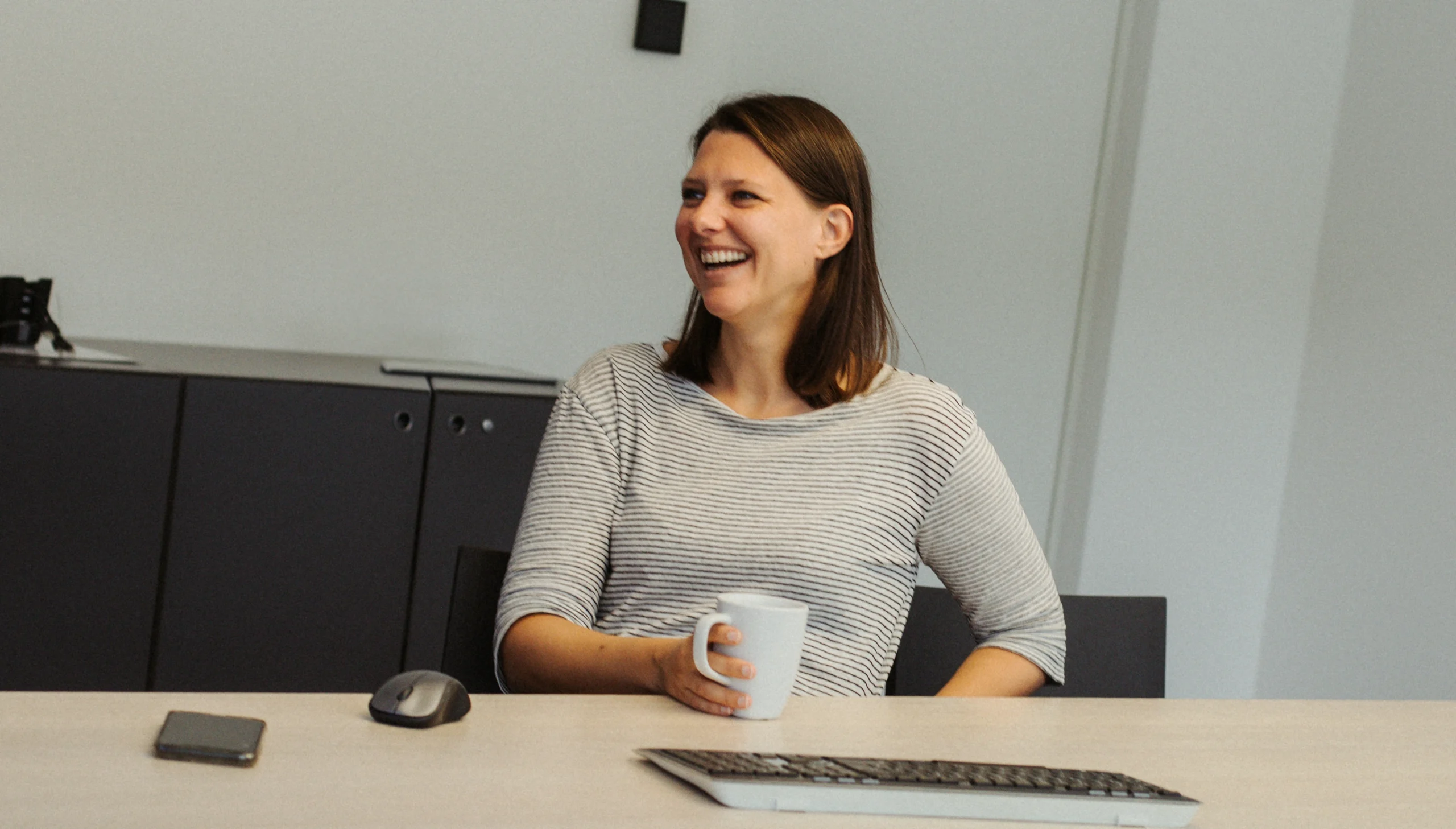
Viktoria Reidl (Strategy Consultant).
Where do you start when designing a legible robot?
JESSIE: Start by questioning the purpose and vision of the robot. What do we want to achieve? Who is it for? Why do people need it? Before doing any design work, deeply understand the what, the who and the why.
VIKTORIA: I’d go as far as saying: justify its existence. What purpose does it fulfil? Where will it live? Who will be around it? We need to distinguish between what we can technically do and what we actually need to implement.
Which design cues make a robot easier to understand?
DIMITRI: Motion is the loudest: acceleration, deceleration, a pause before turning. Then orientation: where it “looks” is where it goes. Light and sound can communicate state.
VIKTORIA: But whatever cues you use, they need to be consistent and learnable. A cue that means one thing today and another tomorrow destroys trust. Legibility is partly about building a small, reliable vocabulary that the user learns once and can recognise over time.
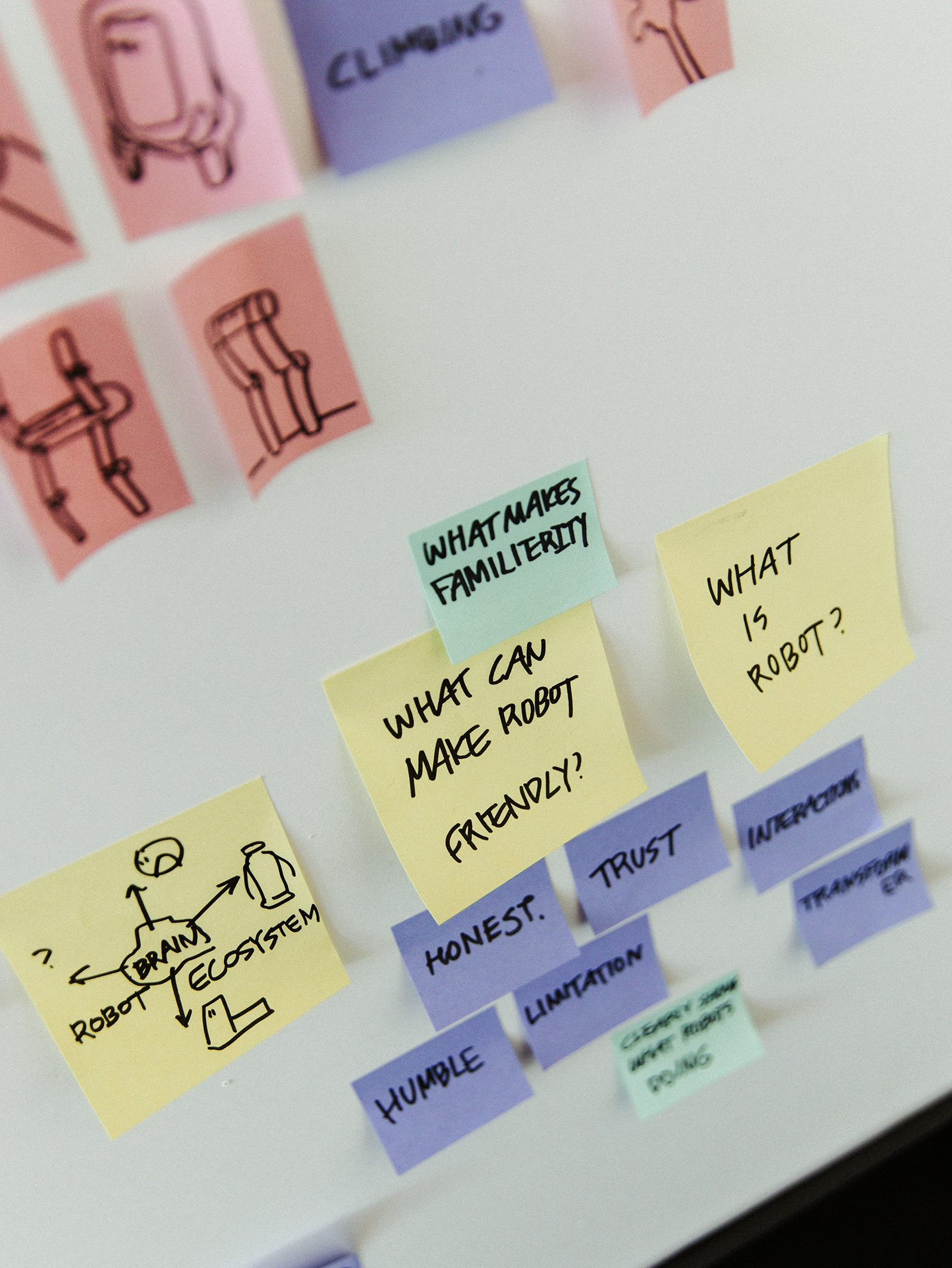
In the robot workshop, we asked ourselves what the prioritities of a robot are? What is the robot ecosystem? And how can we make robots friendly?
Why should brands care about robot legibility?
LISA: A robot is a brand touchpoint, but one that moves, acts on its own and shares physical space with people. Its gestures, pauses and signals are the brand speaking. If people can’t read what it’s about to do, that confusion attaches to the brand. Legibility is the brand expressing itself through behaviour.
VIKTORIA: Plus, great legibility also improves safety!
How can a robot express a brand without becoming a gimmick?
LISA: Derive its personality from the brand core and values, then let that shape how the robot behaves: its rhythm, how it approaches people, how it acknowledges them. Rooted in real values, it reads as character. Bolted on afterwards, like a mascot face or catchphrase, reads as a gimmick.
VIKTORIA: There’s room for character, delight, and brand distinctiveness, but it has to be earned by function.
Why is this kind of work hard for robotics teams to solve alone?
VIKTORIA: Most robotics companies we talk to have their roots in technical topics. They have brilliant technicians and a wide understanding of what’s technically possible. But those cultures are optimised for solving technical problems, so the market and human questions often simply don’t have an owner in the room.
There’s also a curse of knowledge: the people who build the robot can’t un-know how it works, so they can’t judge its legibility like a first-time user can. That’s why an outside perspective can be structurally necessary, rather than simply nice to have.
JESSIE: Right. Robotics teams are experts in robots, technology, and specifications. But they may not be experts in the end users or the brand they’re serving.
What does KISKA bring to that process?
LISA: The brand, market, and target-group perspective: seeing the use case through the human’s eyes. We start from motivations, needs, pains, and gains, e.g. what the person wants from the encounter and what makes them trust it. That’s the translation layer between a working machine and a robot people accept.
VIKTORIA: And because we think across disciplines, we can make those legibility decisions simultaneously technical, formal, and brand-driven, rather than siloed. It’s about bridging engineering and desire.
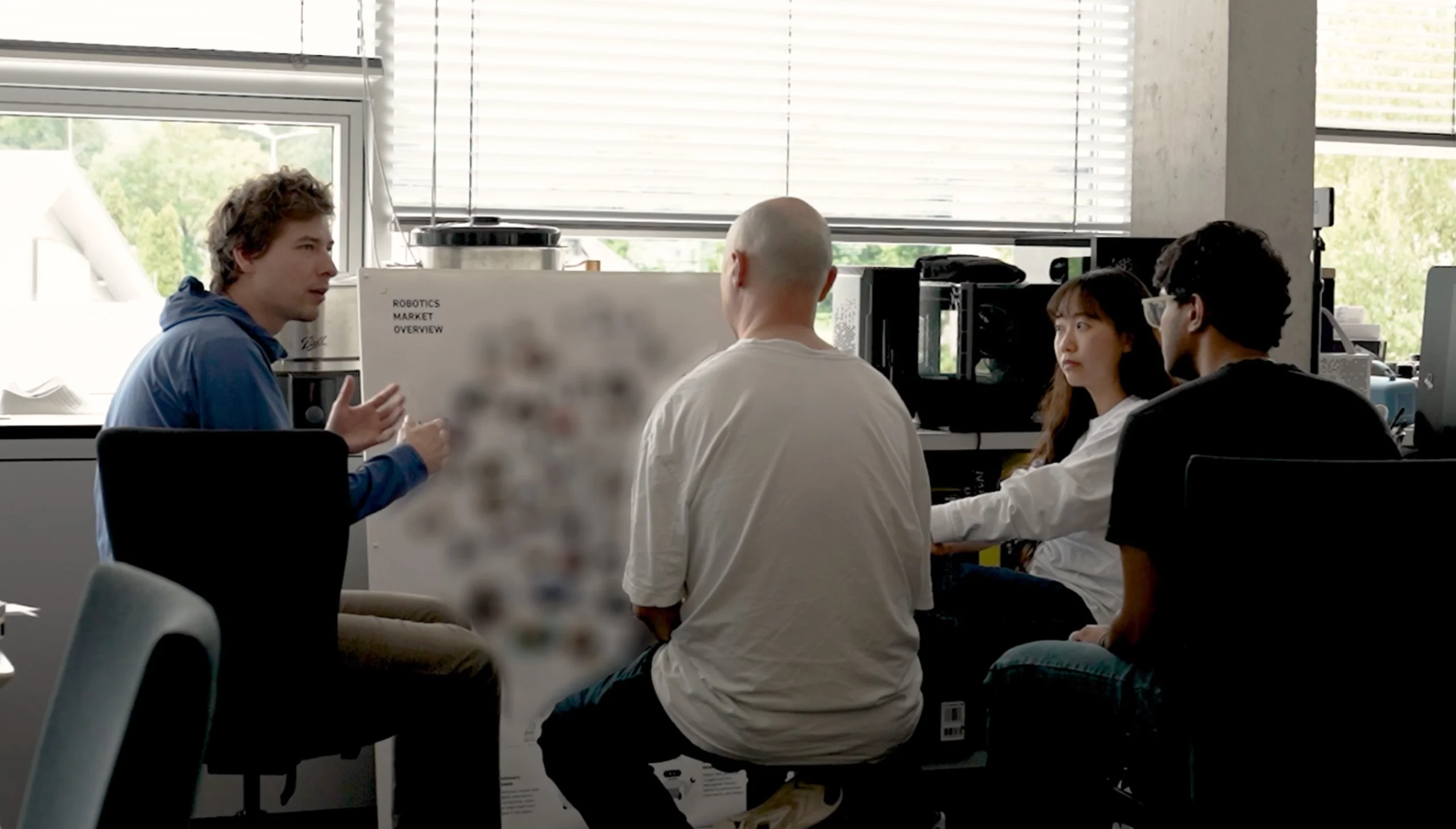
The KISKA product design team discussing the robotics market overview.
Is legibility universal? Or does it change by market and culture?
DIMITRI: Yes and no. There are universal cues (especially ones for safety), but there are also very specific local differences.
JESSIE: Which is why understanding the market matters. Different cultural backgrounds, industries and use cases can have different ideas of what constitutes a legible robot. Understanding those differences helps brands create meaningful value while avoiding potential red flags.
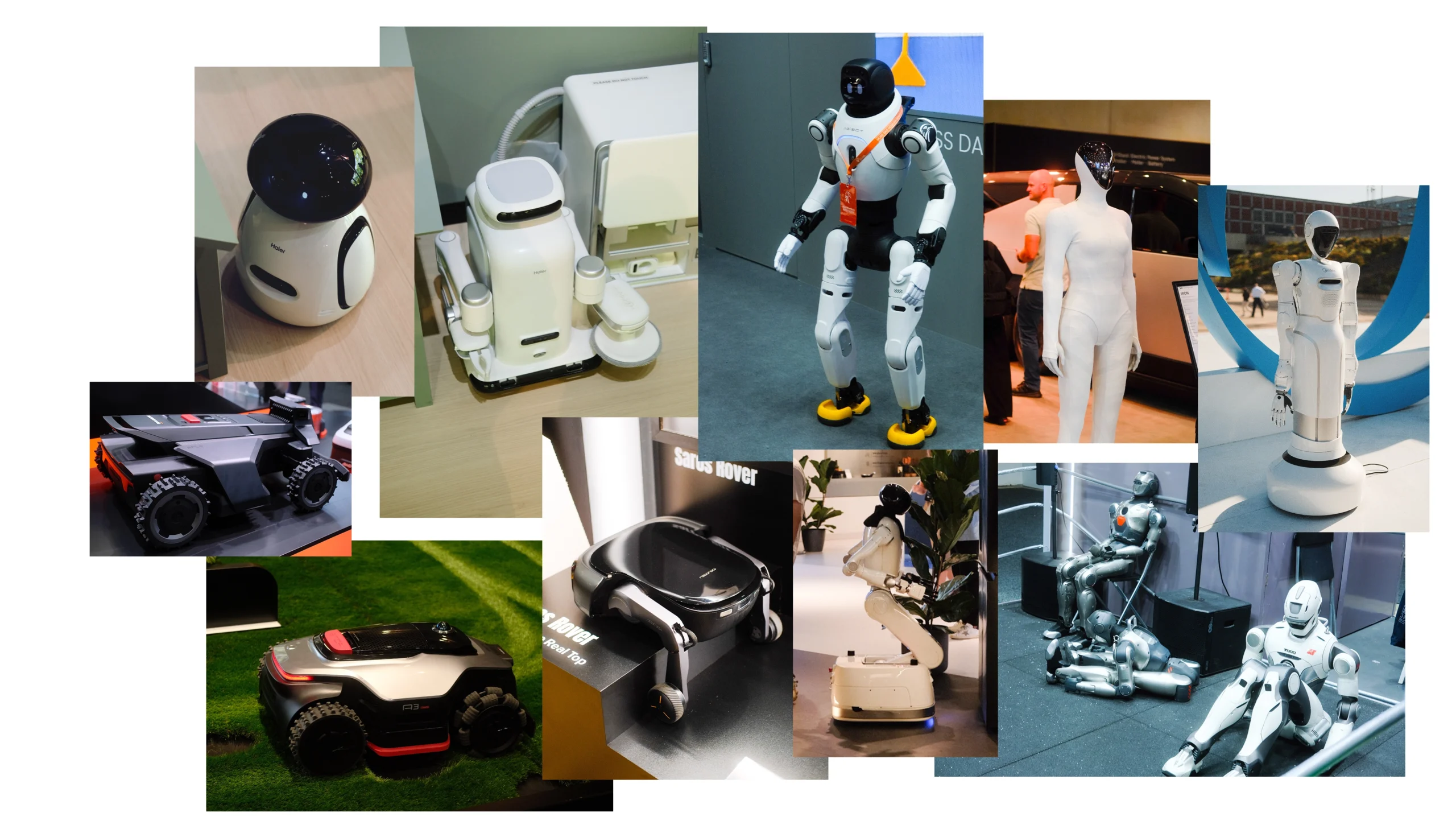
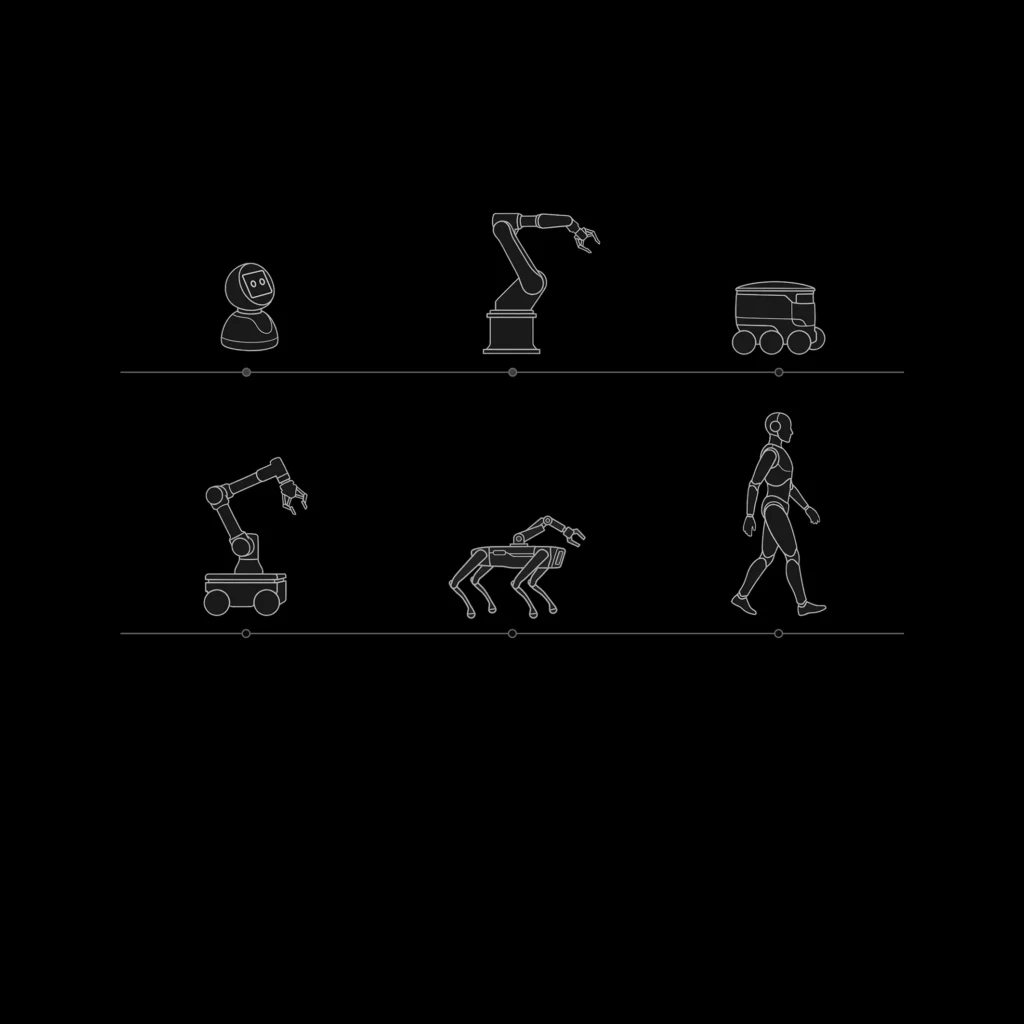
From appliance-like robots to humanoid, there were a lot of highlights from IFA 2026.
What will separate the “good robots” from the “bad robots”?
DIMITRI: The good robots will be the ones people don’t have to think about: understood at a glance, welcome in the room. The bad ones will work perfectly…and still get switched off.
VIKTORIA: Because ultimately, the robot must earn its place. Good robots make people feel more capable or free. Bad robots make people feel replaced, surveilled or slowed down. It comes down to the value exchange.