7 emerging tech and AI trends.
Explore seven emerging tech trends from GITEX AI Europe 2026, including sovereign AI, agent UX, robotics partnerships, cybersecurity literacy, and the growing importance of human-led design.
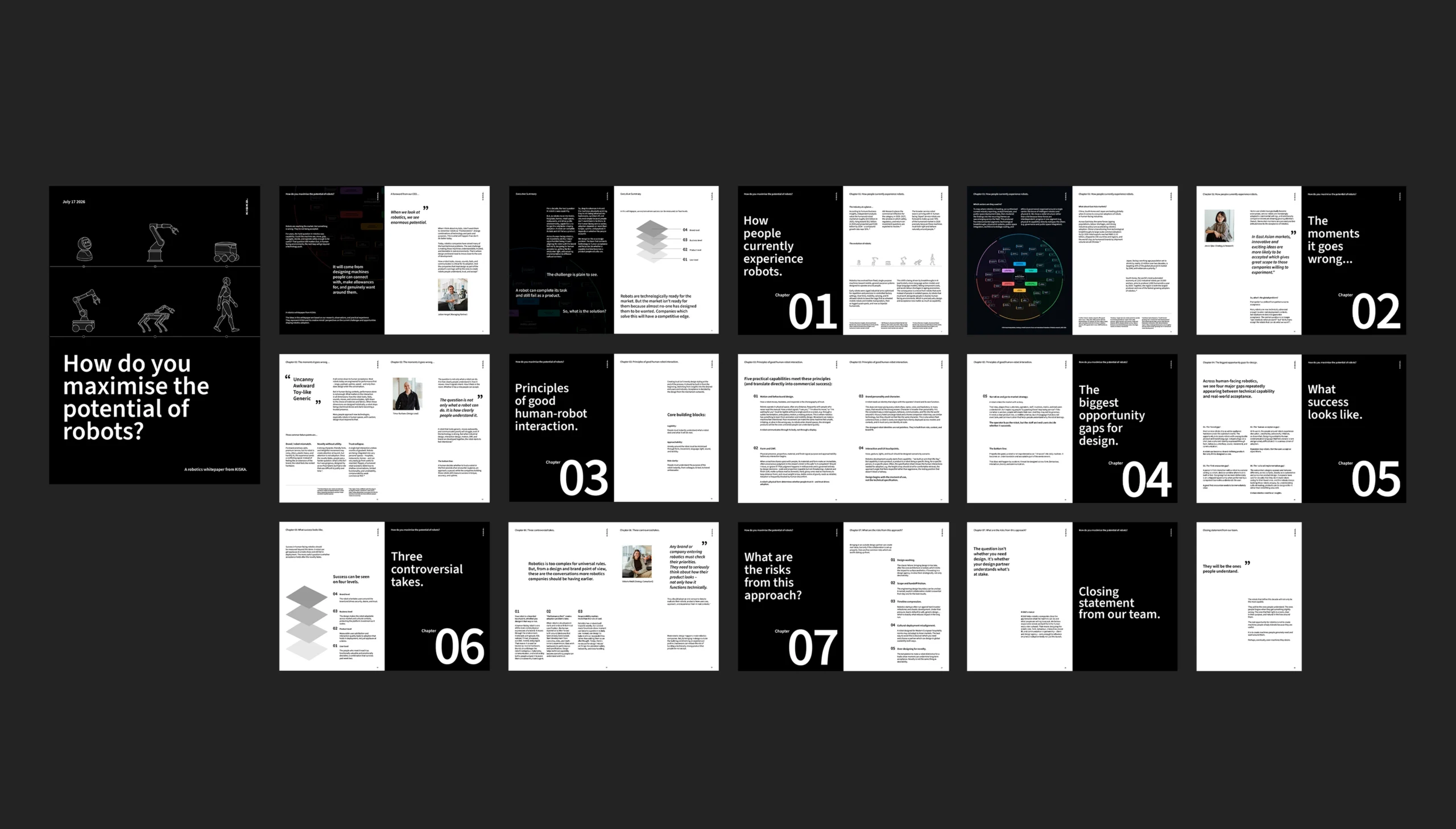
A robotics whitepaper from KISKA.
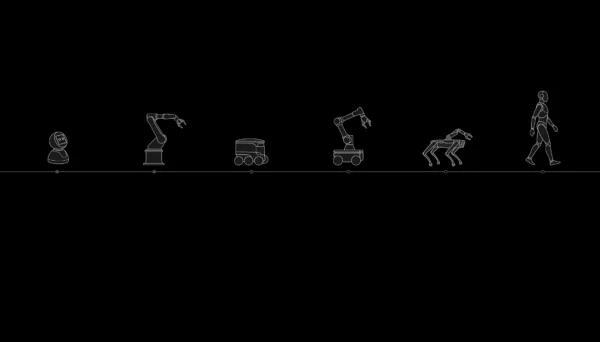
The robotics market is accelerating. Analyst figures value the humanoid robot market at roughly $4.9 billion in 2025, rising towards $6.2 billion in 2026, and projected past $165 billion by 2034. The commercial inflection point is expected around 2026–2027.
This growth is being driven by AI progress, falling component costs, labour shortages, ageing populations, and stronger industrial policy. Robots are moving from controlled industrial spaces into shared human environments, where performance alone is no longer enough.
But…there’s a key problem. Acceptance. Many robotics companies still design from the specification sheet outwards. But in human-facing settings, people judge robots through the full experience: how they look, move, sound, pause, signal intent, and behave in the room.
That judgement happens quickly. A robot that feels generic or unclear can lose trust before it has a chance to prove its usefulness. Attention is not adoption, and novelty fades fast. And our perspective is that many of these challenges can be solved with smart design.
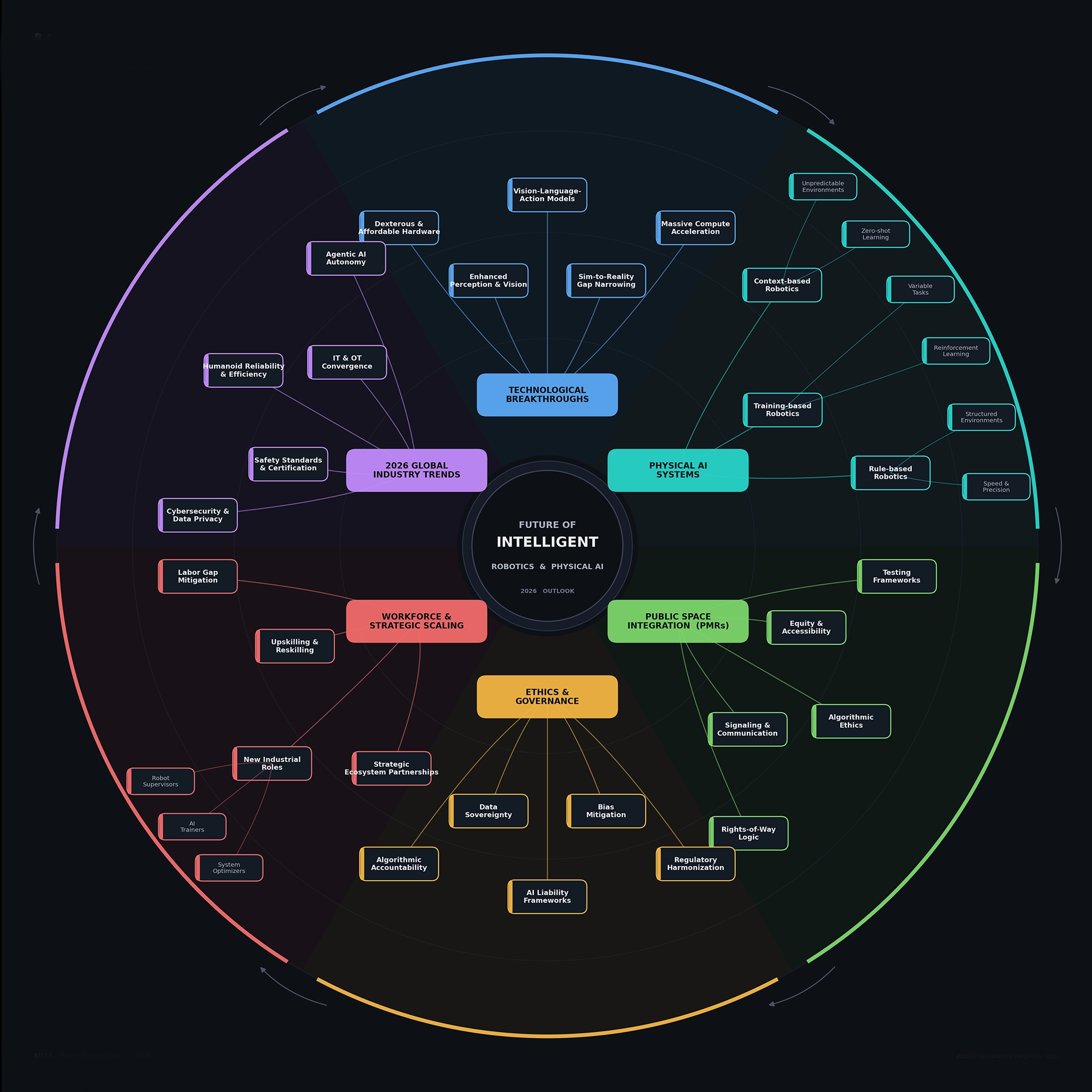
For us, this makes robotics a design and brand challenge as much as a technical one. The job is to connect what the machine can do with what people are willing to accept, trust, and welcome into their environment.
Good human-robot interaction starts with legibility. People should understand what the robot does, what it will do next, and why it belongs in that setting without needing a manual. That means designing motion, behaviour, form, materials, sound, lights, voice, gesture, and touchpoints together. A subtle pause, calm resting posture, or well-judged material choice can make the difference between trust and discomfort.
A robot is the walking, talking, moving expression of a brand. Too many service robots arrive as generic white hardware with an operator’s logo attached. But, if a company can express itself through on-brand legibility in design, then the robot itself becomes a brand-defining product.
Success means users find the robot valuable and acceptable from the start. It means interaction quality holds up in real environments, the platform adapts across markets, and the robot strengthens the brand rather than confusing it.
KISKA helps robotics companies close the gap between what a machine can do and what people are willing to accept. The robots that define this decade will not simply be the most capable. They will be the ones people understand, trust, and eventually want around them.
Boost your business with brand and design.
You talk. We listen.
Contact one of our offices worldwide.