7 emerging tech and AI trends.

Trend Report 

At GITEX AI Europe 2026, seven shifts stood out. Which will you act on?

Jul 13, 2026

1. Own the stack. 

The centre of gravity is shifting. A year ago, the conversation was “which frontier model do we license?” This year, it was “which parts of the AI technology chain do we control ourselves, rather than license or depend on from someone else?” 
 
What stood out to us was not simply the technology but also the communication. Too many brands still reach for the same visual shorthand: flags, padlocks, fortresses, shields. But control is not only about protection. It can mean specificity, resilience, adaptability, transparency, proximity, or simply having more choices. 

The opportunity: 

Sovereignty is approaching the point “sustainability” reached years ago. Everyone will claim it. Far fewer will define what it tangibly means for their customers…or prove they have earned the language. 


2. It takes a village to raise a robot. 

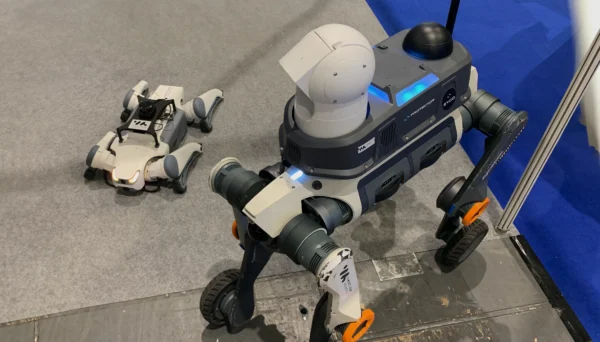
Almost no robotics product came from a single company. Every machine was a collaboration: an LLM dev, a sensor supplier, a battery maker, a joint and motor producer, a mechanical integrator, someone doing the software layer on top.  
 
This approach has two consequences. Firstly, brands that can narrate their partner’s stack credibly will feel more mature than those pretending to be end-to-end. Second, when five companies build one machine, someone has to own form, motion, CMF, and character otherwise the result is a Frankenstein. 

The opportunity: 

In this operating model, the design lead becomes the integrator. Not simply the person styling the shell but a key player in holding the entire experience together.  


3. Your prompt is showing.

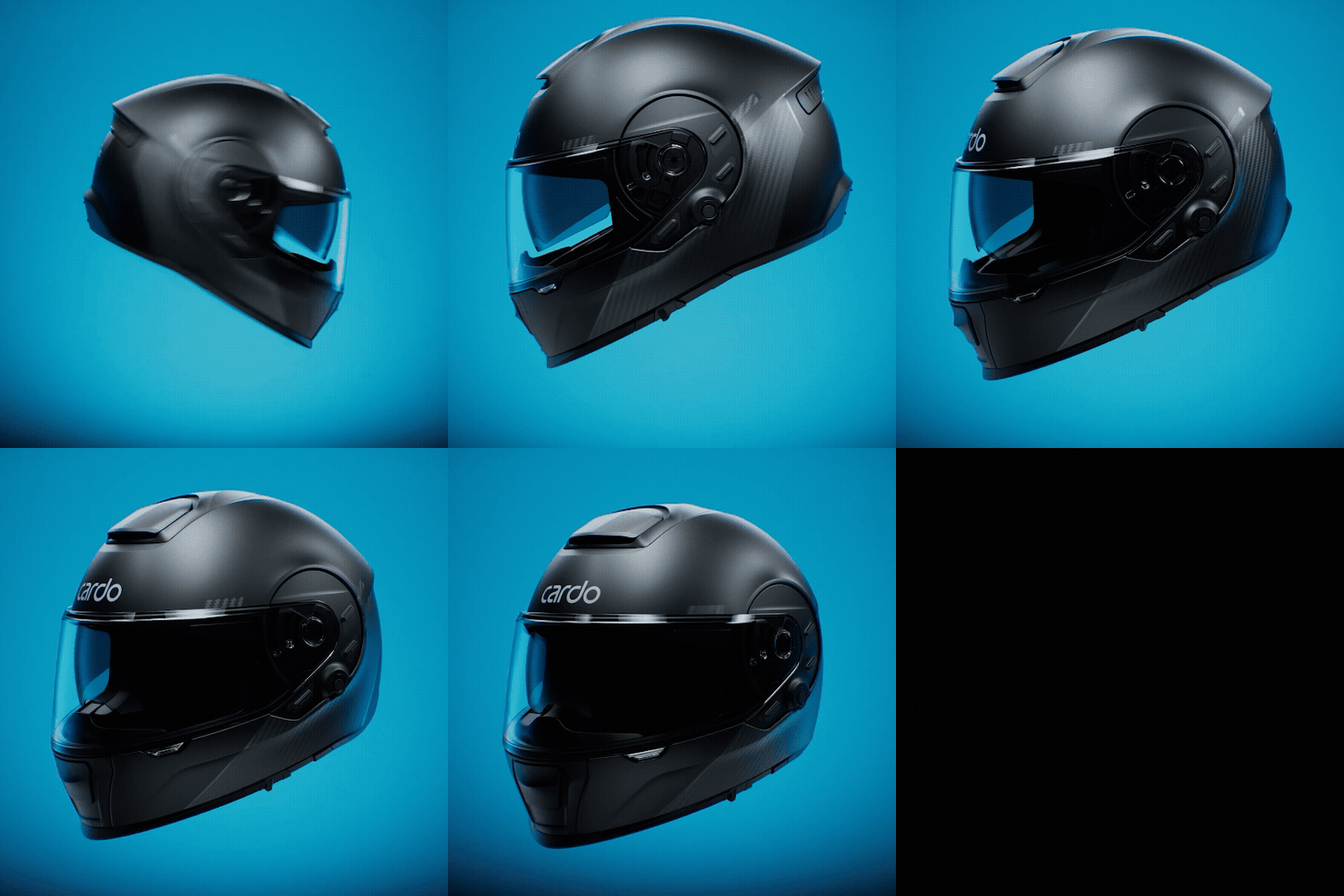
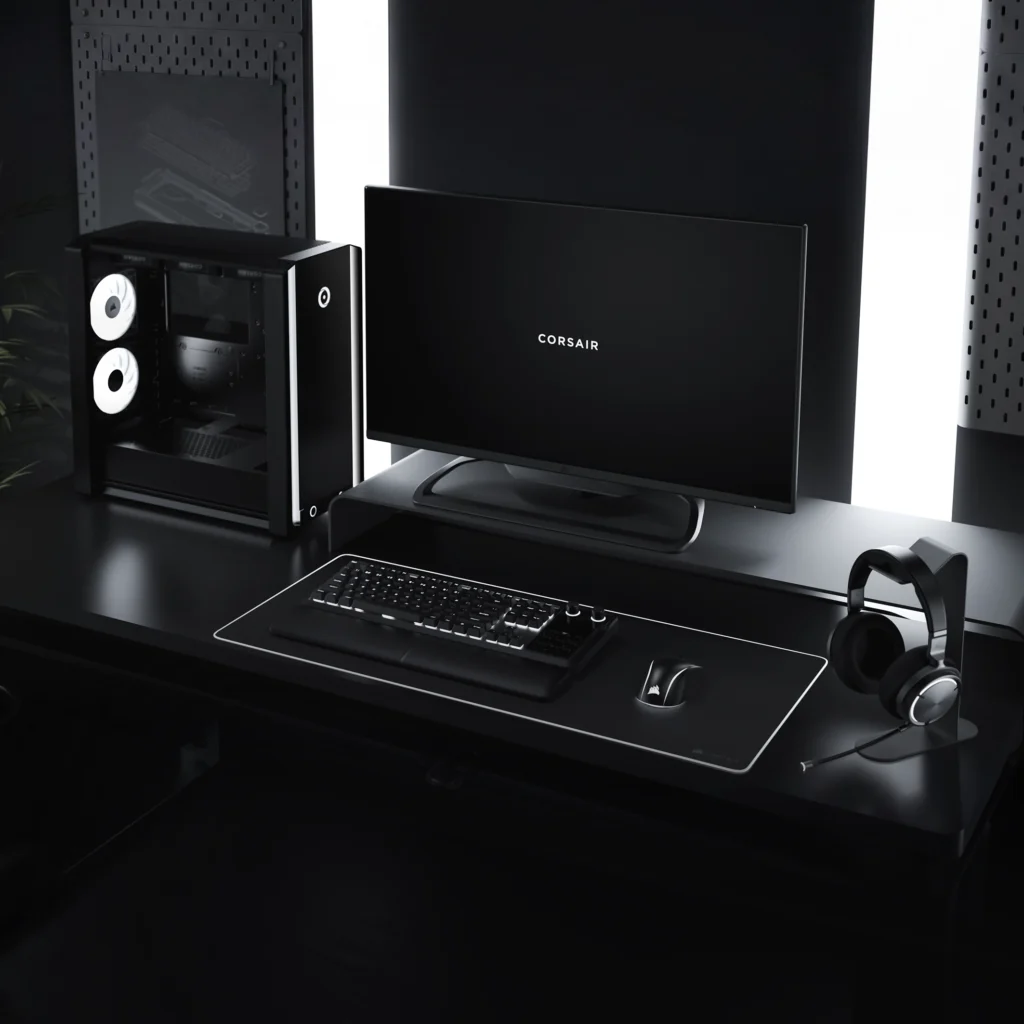
Everywhere, we saw something strange visually. Diagrams, hero images, interface mock-ups, product renders – they all blurred into one aesthetic. Not because AI-generated imagery is bad but because too many use it without experience in creative curation, brand systems, or a deliberate point-of-view. 
 
A small number of companies stood out, and everyone invested into deliberate, human-curated design. The others blended into an indistinguishable generic blur.

The opportunity: 

In a world where everyone can generate a slick image, curated, considered, and on-brand design is the strongest signal of competency.  


4. AI got the job. 

Gone are AI agents as demos. Today, agents were being presented as deployed systems with outcomes to measure, actions to audit, and jobs to complete. The event programme itself strongly emphasised real-world AI deployment and enterprise application rather than purely experimental tech.  
 
This leads to a new design discipline being born: Agent UX. The chat window as universal interface is already dated. And we need to consider trust signals, handoff moments, and the choreography of work moving between human and machine.  

The opportunity: 

Those UX / UI designers developing the new vocabulary now, while it’s still soft, get to decide how the next decade of software behaves.  


5. Blink and you missed it. 

The floor was very dense and fragmented. Behind a handful of visible players sat hundreds of startups on desk-sized sports; many with cool tech but low discoverability. It’s a pattern common at all tech trade fairs but AI intensifies it: the tech is invisible.  
 
You can’t glance at a model, API, or data layer in the same way you can glance at a shoe, vehicle, or other physical product. Until someone gives it a language or story, tech is easy to overlook, especially on small stalls. For startups, brand and booth design is oxygen.  

The opportunity:

On a dense trade-fair floor, a distinct story or visual system can do what a larger booth cannot.  


6. Security has a people problem.  

AI-powered social engineering, deepfakes, and increasingly convincing phishing are developing faster than the literacy of many of the people expected to use or defend against them. This changes the design brief for security.  
 
For years, cybersecurity products have largely focused on detecting, blocking, and alerting. But when users cannot understand why something is suspicious, another warning light only gets you so far. The best products should make users harder to exploit over time.  

Opportunity: 

Development of products which teach as they protect, e.g. plain-language explanations and tools which help people recognise manipulation.


7. The tech is ready. The interface isn’t. 

Under the hood, the industry has arrived. The models work, the sensors work, the compute is there, and the agents are deployed. But the layer between human and machine is still playing catch-up. 
 
Talking to an agent means learning its quirks. Setting up an automation can still look suspiciously like code. AR glasses often expect the wearer to understand the technology before they can benefit from it. Across the board, interfaces are asking users to do too much of the learning. 

The opportunity: 

Treat the human-machine interface as the product, not the wrapper. The next decade will belong to those who make advanced technology feel intuitive without asking people to think like machines. 


Overall, we think this new technology creates new design opportunities for those willing to invest. Let’s talk about where your brand can gain an advantage.